
1. Embryo grading standards
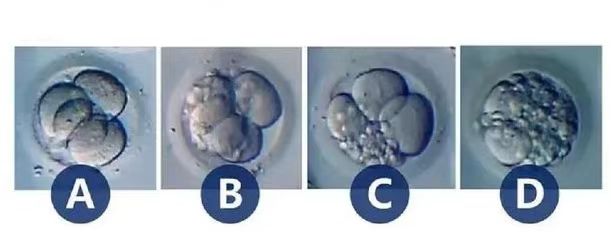
Currently, embryo levels are mainly divided through morphological observation (taking blastocyst as an example)
● The cells in the cell mass of grade I (high-quality A blastocyst)are closely arranged, and the trophoblast is well developed.
● Level II (Good-quality blastocysts)The fragmentation rate is less than 10%, so it does not affect subsequent development.
●Level III (General Blastocysts)The fragmentation rate ranges from 10% to 25%. There may be issues related to developmental delays.
● Level Ⅳ (Poor-quality blastocysts)The fragmentation rate exceeds 25%, or there are abnormalities in the cell structure.
Experts from Peking Union Medical College Hospital point out that the grade of embryos is an important reference criterion, but it is not the sole determinant of success. Embryos rated as Grade III, or even some Grade IV embryos, can still successfully implant.
2. Significant differences in embryo survival rates among different age groups
Clinical statistics show that the survival rate of embryos is closely related to the age of women, and the pregnancy rates of different grades of embryos differ significantly in different age groups.
●About 15%-20% of grade IV embryos in women under 30 years old.
● Women around 35 years oldThe number of Ⅳ-grade embryos is less than 10%.
● Women over 40 years oldThe success rate of embryos at level IV is almost zero.
1. Elderly women with declining egg quality have an increased risk of chromosomal abnormalities in oocytes and a reduced embryonic development potential.
1. Decline in egg qualityWomen in older age have a higher risk of chromosomal abnormalities in oocytes, and their potential for embryo development also decreases.
2. Changes in the uterine environmentThe receptive ability of the endometrium, blood flow, and hormone levels gradually decrease as age increases.
3. Multiple reasons for embryo implantation failure
Clinical data shows that about 50% of IVF failures are related to implantation disorders, and low embryo grade is only one of the potentialfactors
1. Insufficient receptivity of the endometrium, less than 7mm thick, poor blood flow, or presence of polyps/adhesions.
1.The thickness is less than 7 mm. There may be poor blood flow, or the presence of polyps/adhesions.
2. Abnormal embryonic chromosomesNormal-shaped embryos may carry non-disomic chromosomes.
3. Immune system disorders and endocrine imbalanceSuch as antiphospholipid antibody syndrome, thyroid dysfunction.
4. Limitations due to laboratory cultivation conditionsAn excessive duration of in vitro culture may affect the vitality of the embryos.
Four
1. Preimplantation Genetic Screening (PGT-A) screens embryos with normal chromosomes.
1. Preimplantation Genetic Screening (PGT-A)Filter out chromosomes that are normal.
2. Endometrial Responsiveness Testing (ERT)Determine the appropriate window period for transplantation.
3.Dynamic monitoring of development, with laser-assisted methods to improve adhesion capabilities.
4. Individualized endometrial preparationAdjusting hormone therapy to optimize the thickness of the endometrium.
5. Expert suggestions: Comprehensive assessment of fertility
An expert from the Obstetrics and Gynecology Hospital Affiliated to Fudan University in Shanghai said: "A 38-year-old woman once had an embryo rating of Level III and successfully became pregnant after adjusting the transfer time through ERT.
:“38Ⅲ,ERT.Comprehensive analysis needs to be combined with age, ovarian reserve, uterine cavity environment, etc."
Recommendations for low-level embryo preparation
● Priority transplantation: Young patients can try natural cycle transplantation.
● Priority for transplantation: Young patients may consider undergoing natural cycle transplantation.
● Combined treatment: In conjunction with traditional Chinese medicine enemas, this approach helps to regulate immunity and improve the pelvic environment.
● Psychological counseling: Helps alleviate the negative effects of anxiety on uterine blood flow.
In short, low embryo grade does not mean a complete loss of fertility hope.
,.Through precise assessment, personalized intervention and scientific conditioning, many patients still have the opportunity to get pregnant. It is recommended that patients fully communicate with their doctors and formulate targeted pregnancy assistance plans to avoid excessive anxiety and delay treatment.
For more on fertility preparation, second/third-generation IVF, and overseas, U.S., Thailand, Malaysia, America or Cambodia IVF, scan the QR code on the right or call lelaiwa's hotline+852 6145 8043!
