
Myth 1: The sooner you freeze eggs, the better?
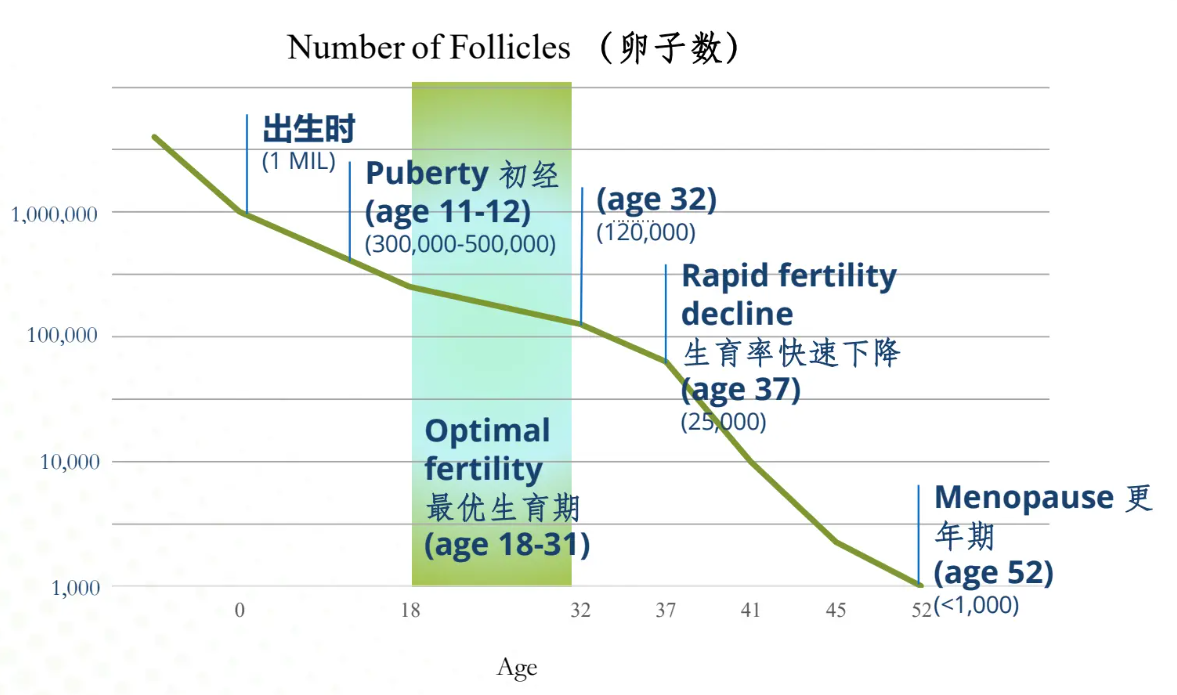
After the age of 38, egg quality and quantity decline like a cliff
Trade-off for young women: Although the egg quality of women aged 20-30 is excellent, if there is no clear fertility plan (such as cancer treatment, risk of premature ovarian failure), premature egg freezing may cause a waste of resources. It is recommended to complete the first egg freezing between the ages of 30 and 35, taking into account quality and economy.
Myth 2: The greater the number of eggs retrieved, the higher the success rate?
Golden range: The ideal value is 15-20 eggs taken in a single cycle. After more than 20, the risk of ovarian hyperstimulation syndrome (OHSS) rises to 15%, which is manifested as ascites, renal function damage and even thrombus.
Age differentiation strategies
|
age |
Recommended number of frozen eggs |
Number of high-quality embryos expected to be formed |
|
<35years old |
15-20tablets |
3 to 5 |
|
35-39years |
21-30grains |
2 to 4 |
|
40yearsand older |
≥30 |
2orfewer |
Myth 3: Frozen eggs can be stored indefinitely?
Technical feasibility: Vitrification freezing technology allows eggs to survive for a long time in liquid nitrogen at-196℃, and the thawed survival rate is>90%.
Policy and ethical limitations
China: Egg freezing is only allowed for medical indications (such as cancer treatment), and storage for non-medical purposes is prohibited.
China Hong Kong: The maximum storage period is 10 years (extended to 55 years under special circumstances).
United States/Thailand: The storage period is more than 10 years, and it needs to be renewed or destroyed if it is exceeded.
Japan: Healthy unmarried women can freeze their eggs, but it is prohibited after the age of 45.
Myth 4: Will frozen eggs lead to early menopause or premature ovarian failure?
Clarification of the ovulation promoting mechanism: Ovulation promoting drugs only activate follicles that will be atresia in the month ("turning waste into treasure") and do not consume additional ovarian reserves.
Long-term research supports that 10 years of follow-up shows that there is no difference in menopausal age between women with frozen eggs and natural populations.
Myth 5: Unmarried women can't freeze their eggs?

Technical feasibility: Those who have not had sex can choose transabdominal B-ultrasound-guided egg retrieval to avoid vaginal procedures, but the number of retrieved eggs will be reduced by about 30%.
Policy reality: Mainland China is limited to married couples or people on medical indications. Unmarried women need to go to Hong Kong, Thailand, Japan, the United States and other places to operate.
Myth 6: The quality of frozen eggs is significantly lower than that of fresh eggs?
Technological breakthrough: Vitrification freezing technology reduces the hardening rate of the egg zonula pellucida to <5%, and the fertilization rate after combined with single sperm injection (ICSI) technology reaches more than 80%, which is the same as that of fresh eggs.
Infant health data: There was no statistical difference between the congenital malformation rate of frozen eggs (0.8%) and natural pregnancy (0.7%).
Myth 7: The number of retrieved eggs equals the number of available embryos?
Loss link analysis
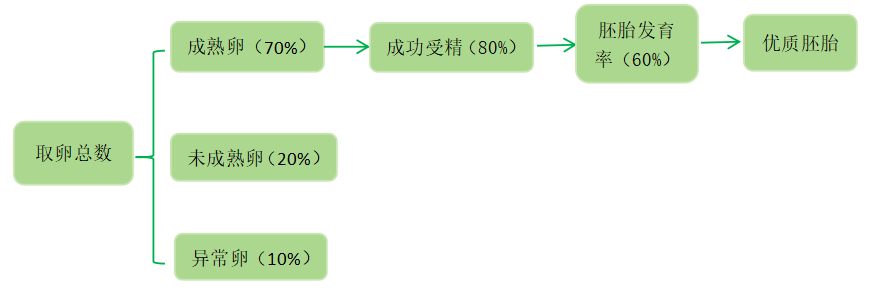
Note: On average, 15 frozen eggs only form 2-3 high-quality embryos
Myth 8: Is there a health risk for frozen eggs babies?
Three generations of follow-up evidence: The first frozen egg baby (1986) has so far naturally given birth to healthy offspring. Large-scale studies have shown that there is no difference between its cognitive development and chronic disease incidence from the general population.
Myth 9: Is the United States leading the world in egg freezing technology?
Technical homogenization: China, the United States, Japan and Thailand all adopt the standard process of vitrification freezing, and the thawing survival rate is all>90%. Regional differences mainly lie in policies (such as storage years) and fees (higher costs in the United States) and whether transshipment can be carried out later.
For more on fertility preparation, second/third-generation IVF, and overseas, U.S., Thailand, Malaysia, America or Cambodia IVF, scan the QR code on the right or call lelaiwa's hotline+852 6145 8043!
