
Introduction to the Reproductive Center of Peking University People's Hospital
Peking University People's Hospital (Peking University People's Hospital) is located at No. 11 Xizhimen South Street, Xicheng District, Beijing. The Department of Family Planning and Reproductive Medicine of Peking University People's Hospital has a history of more than 30 years. In 1982, it cooperated with the national family planning policy to conduct obstetrics and gynecology
The department has established a family planningspecialtyand also initiallystartedthe treatment of infertility.
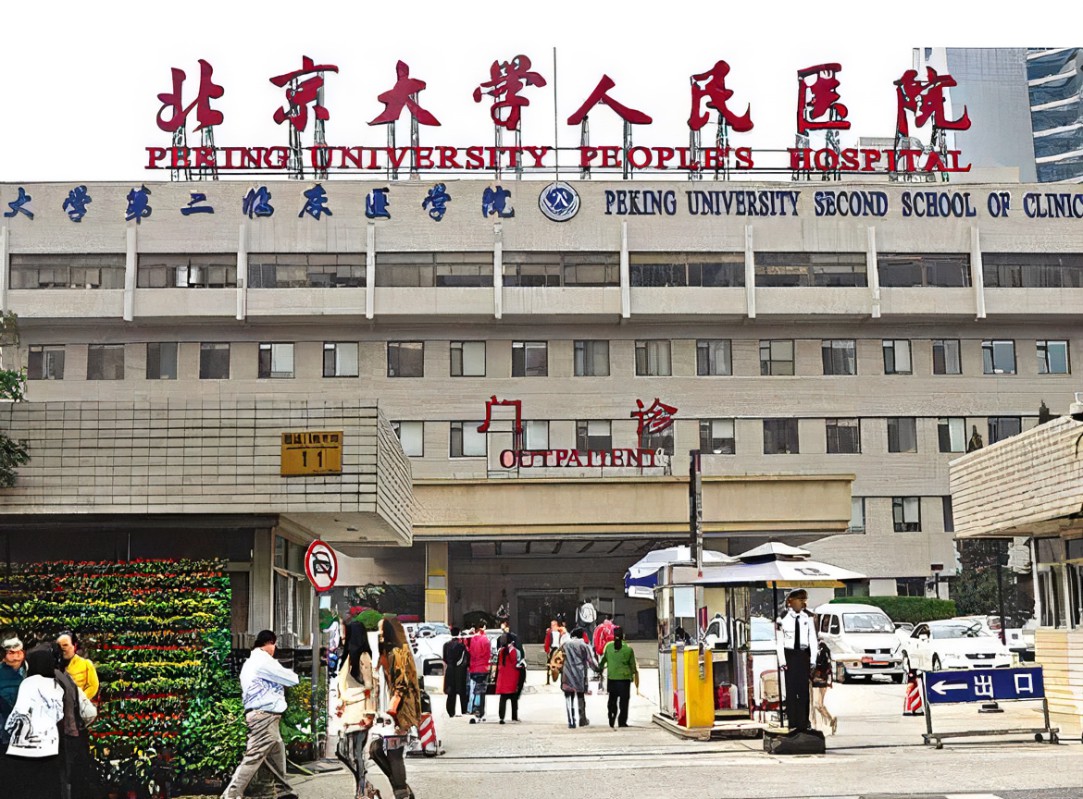
Peking University People's Hospital Outpatient Clinic
tHospital background and historical development
Peking University People's Hospital was founded in 1918. It is a tertiary A comprehensive hospital integrating medical treatment, teaching and scientific research. The hospital was formerly known as Beijing Central Hospital. In 1958, the Ministry of Health assigned Beijing People's Hospital to Beijing Medical College
As the Second Affiliated Hospital, itbeganto undertake undergraduate teachingwork. At the same time, the hospital was renamed the People's Hospital Affiliated to Beijing Medical College. On April 30, 2000, Peking University and Beijing Medical University were officially merged, and the hospital was renamed Peking University People's
Hospital. The Department of Family Planning and Reproductive Medicine of the hospital opened a professional outpatient clinic for infertility treatment in 1996. In 1997, it began to build the second reproductive medicine center in Beijing City to carry out in vitro fertilization and embryo transfer, oocyte plasma single sperm injection, intrauterine cavity
Assisted reproductive techniques such as internal artificial insemination, as well aslaparoscopic and hysteroscopic minimally invasive surgical treatment of non-pregnancy. In Beijing City, the first batch of people passed the human assisted reproduction technology qualification certification by the Ministry of Health, and became the approval of the Ministry of Health to carry out human assisted reproduction
A professional medical institution with technology.
The Department of Family Planning and Reproductive Medicine at Peking University People's Hospital has a history of more than 30 years. In 1982, a family planning specialty was established in the Department of Obstetrics and Gynecology in line with the national family planning policy. At the same time, the treatment of infertility was initially started. Opened in 1996
Professional out-patient clinics for infertility treatmentbegan in 1997 to planto build the second reproductive medicine center in Beijing City to carry out assisted reproductive technologies such as in vitro fertilization and embryo transfer, oocyte plasma single sperm injection, intrauterine artificial insemination, and infertility laparoscopy
and hysteroscopic minimally invasive surgical treatment. In Beijing City, it was one of the first batch ofcertified human assisted reproductive technology qualificationsby the Ministry of Health and became a professional medical institution approved by the Ministry of Health to carry out human assisted reproductive technology.
The Department of Family Planning and Reproductive Medicine was officially established in 2004. After nearly 20 years of development, the reproductive medicine profession has established a team of experts who love their own work, have superb clinical skills, and have increasingly improved scientific research levels. It has more than 40 employees
people. There are two professional outpatient clinics: reproductive medicine andplannedstudenteducation, with more than 30 beds. It has advanced diagnosis and treatment facilities, including laminar flow purification embryo laboratory, complete embryo culture equipment, microinjection console, etc.; hysteroscopy, laparoscopy
A complete set of minimally invasive surgical equipment for infertility such as salpingoscope;automatic real-timedynamic oocyte transfusiontube imaging equipment, etc. It can carry out systematic and standardized diagnosis and treatment of female and male infertility, and treat fallopian tube obstruction, polycystic ovary syndrome, intrauterine
The diagnosis and treatment level of common diseases such as ectopic infertility, recurrent abortion, and male oligospermiahasreached the leadinglevel in China, and it can carry out various assisted reproduction such as in vitro fertilization andembryo-fetal transfer (test-tube baby), intrauterine artificial insemination, etc.
Technology, more than 2000 people are provided with assisted reproductive treatment every year
nSpecial diagnosis and treatment
1. Etiological diagnosis items of female infertility: including gynecological endocrine hormone measurement, B-ultrasound monitoring of ovulation, hysterosalpingography (fallopian tube patency test), color ultrasound, hysteroscopy and laparoscopy, etc.
2. Etiological diagnosis items of male infertility: fully automatic semen analyzer, sperm morphology analysis, sperm function determination, seminal plasma biochemical analysis, Y chromosome microdeletion detection, chromosome examination, etc.
3. Assisted reproductive technology: In vitro fertilization-embryo transfer: treatment of infertility caused by various reasons such as fallopian tube blockage, pelvic adhesions, and endometriosis, as well as infertility that cannot be treated by other methods. Intra-oocyte single sperm injection: Treatment
Treatment ofsevere male asthenozoospermia, obstructedazoospermia, retrograde ejaculation, etc. Male infertility, intrauterine artificial insemination with male sperm: Treatment of husband asthenozoospermia, cervical infertility, unexplained infertility, etc.
4. Induction and monitoring of ovulation: treating anovulatory infertility such as polycystic ovary syndrome
5. Laparoscopic surgery: Infertility caused by hydrosalpinx, tubal obstruction, pelvic adhesions, endometriosis, uterine fibroids, etc.
6. Hysteroscopic surgery: correction of deformed uterus (mediastinum, etc.), dissolution of intrauterine adhesions, resection of endometrial polyps, and resection of submucosal myomectomy
7. Recurrent abortion: Systematically examine the causes of recurrent abortion, including chromosome examination of both couples, antibody screening, coagulation function test, sex hormone measurement, follicular development, luteal function test, and uterine abnormalities test
etc. Treatment of causes, includingpre-pregnancytreatment,pregnancy guidance, and post-pregnancy supportive treatment, allows most patients to successfully reach term when they become pregnant again
8. Treatment of male infertility: For patients with oligospermia, asthenospermia, teratospermia and even azoospermia, you can choose medical treatment, surgical treatment, sperm optimization, single sperm oocyte injection and other methods for treatment
9. Difficult family planning surgeries such as abortion with high-risk complications, difficult removal of IUD, uterine artery embolization and hysteroscopic treatment for scar pregnancy, and painless abortion under B-ultrasound guidance, etc.
If you want to learn more about the multinational assisted reproduction program, you can also contact the customer service ofPeking University People's Hospitalfor free consultation. Customer service telephone:18101365219


